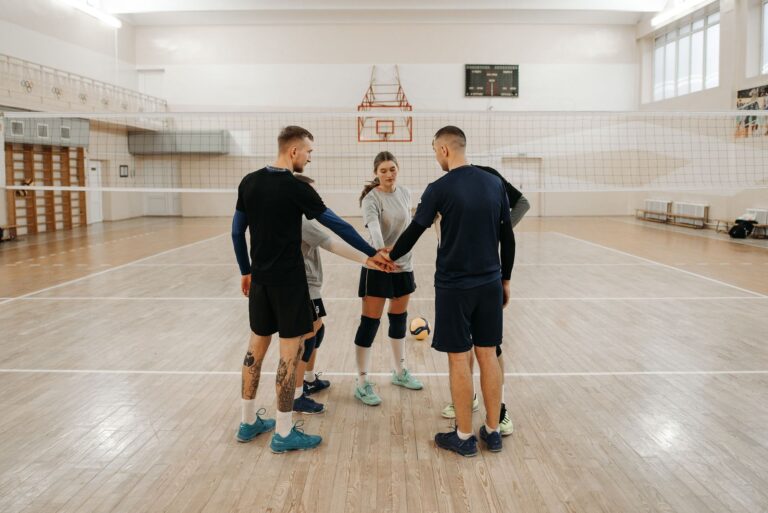
Have you told yourself to focus-without actually knowing what you’re asking your mind to do? Then you need focus training techniques. For high performers, your attention is constantly being pulled in different directions. An athlete may be reading an opponent, monitoring their own movement, listening for a coach’s feedback, reviewing their game plan, and managing thoughts about how to recover from a mistake that just happened or what might happen next-all within seconds. A musician must attend to timing, technique, sound, and the ensemble. A leader may be listening, making decisions, and filtering competing information simultaneously. In all of these situations, the performers’ attention is everywhere, and the attentional demands from their personal lives were not even accounted for. Your environment, your thoughts, and your tasks are constantly competing for your attention-but focus is what you do with it. That is why focus training matters.
Attention is the general awareness of information from both our environment and our internal experience. Focus is the intentional direction of that attention toward what is most relevant to the task at hand. You can have plenty of attention and still lack focus. Your attention may be occupied by the scoreboard, the crowd, a previous mistake, an upcoming outcome, or an internal thought when what matters most is the next play. Focus, therefore, is not about concentrating harder or eliminating distractions. It is about intentionally directing your attention, and when that attention inevitably wanders, recognizing it and bringing it back to what matters.
“Focus is the art of knowing what to ignore.”
– James Clear
The Importance of Focus
Where attention goes, performance follows. In high-performance environments, individuals are constantly making decisions about what information to take in, what to prioritize, and what to ignore. When focus is absent, there can be real consequences: injury, losing a competition, millions of dollars, a team moving in the wrong direction, and, in some situations, even the loss of life. Motor Behavior research on attentional focus has found that where performers direct their attention can influence the effectiveness, accuracy, consistency, and efficiency of their movements.
Focus training becomes even more important as the demands of performance increase. No matter what high-performance environment you are in, pressure and time constraints will happen. In those moments, your ability to focus on what matters most can make the difference between surviving and thriving.
In Sports
Athletes are constantly taking in information while still needing to execute the task in front of them. When pressure increases, the ability to identify what matters and keep attention connected to the task can become even more important. A missed cue, a distracted mind, or attention stuck on a previous mistake can change the outcome of a competition. Focus does not guarantee a perfect performance, but it gives an athlete the opportunity to use the skills they have trained when the moment arrives.
In Business
Leaders and business owners need focus to separate what is urgent from what is actually important. A leader may be managing employees, making financial decisions, responding to customers, solving problems, and thinking about the future-all at the same time. Without the ability to determine what deserves attention, it becomes easy to react to everything instead of intentionally moving toward what matters most. A distracted leader can create a distracted team. Focus training can help leaders make clearer decisions, communicate more effectively, and keep their team moving in the right direction when pressure and competing priorities increase.
In Ministry
Ministry frames focus differently. Scripture repeatedly calls the church to intentionally direct their attention toward Christ rather than allowing the distractions and circumstances around them to become their primary focus. “Let us fix our eyes on Jesus” (Hebrews 12:2) is a simple picture of this: what we choose to look toward matters. Ministry leaders and believers alike can become distracted by circumstances, expectations, conflict, busyness, or even the opinions of others. Focusing on Christ does not mean those things disappear; it means they do not become the center of our attention. Just as a performer must learn to direct attention toward what matters most, faith calls the church to continually redirect their attention toward Christ, even when everything around them is competing for it.
Five Focus Training Techniques
Focus is not something you either have or do not have; it is a skill that can be trained. The following techniques give you practical ways to engage in focus training
1. Build the Foundation of Focus
Your brain plays a central role when it comes to your attention and focus, so taking care of its basic needs matters. Before getting into specific techniques for training focus, you have to start with the basics: sleep, hydration, exercise, and nutrition. These factors can influence how well your brain functions, including your ability to stay alert, process information, and maintain attention.
Think back to the last time you were “hangry.” Maybe you were more irritable, had trouble thinking clearly, or found yourself getting distracted more easily. Now imagine trying to perform at a high level while feeling that way. For example, imagine a soccer goalie who did not get enough sleep, rushed through their morning, and did not eat the way they normally would before a game. Their position requires quick reactions, decision-making, and sustained attention, but they may find it harder to stay alert and respond effectively when their body and brain are not properly prepared. The same basic needs that affect how you feel throughout an ordinary day can also affect how prepared you are to perform when the stakes are high.
Training your focus doesn’t begin with a complicated mental exercise. It begins with giving your brain what it needs to do its job.
| Immediate Actions 1. Check your foundation: Identify one basic need-sleep, hydration, exercise, or nutrition-that you have been consistently neglecting and choose one small change to make this week. 2. Notice the side effects: The next time you notice yourself struggling to focus. Ask: What does my brain need right now? 3. Get your stats: For one week, track your sleep, hydration, and meals alongside your ability to focus. Look for patterns rather than perfection. |
2. Creating a Focus Routine your Brain Recognizes
Your pre-performance routine can do more than prepare your body for performance-it can support your focus training. Whether it happens before you step into your performance environment or right before you execute a skill, there is often a short window where you can intentionally direct your attention toward what matters most. A consistent routine gives you a familiar way to use that window and prepare your mind for what comes next.
Think about a basketball player preparing for a free throw. They might take the same number of dribbles, take a breath, find the rim, and shoot. Those actions are not just something to do before the shot. Each part of the routine can serve as a focus cue for where attention should go: breathe, target, execute. A business leader might take a breath, review the key point they want to communicate, identify the outcome they want from the conversation, and then step into a difficult meeting. The performance routine may look different and be executed at different times, but the purpose is the same: use a familiar pattern of actions to direct your focus toward what matters before performance begins.
With repetition, the routine becomes familiar and can require less conscious thought. This allows the performer to spend less time deciding how, what and where to focus, and more attention on the task itself. Your routine should not just tell your body what comes next; instead, it should tell your mind where to go.
| Immediate Actions 1. Choose your performance moment: Identify one specific moment when you regularly need more focus to perform-before a competition, presentation, meeting, difficult conversation, or a certain task. 2. Identify what matters most: Before that moment, ask yourself: What do I need to pay attention to for this performance to go well? When I perform at my best, where is my attention? Choose one to three task-relevant things you want your attention on. 3. Create your routine: Build a short, repeatable sequence that prepares you for those focus targets. This could include a breath, physical movement, visual cue, or a short phrase. Keep it simple enough to repeat every time before that task. |
3. Resetting Focus When it Wonders
Similar to a pre-performance routine, a reset cue gives you a way to intentionally direct your attention-but the timing and purpose are different. A pre-performance routine prepares your focus before performance begins. A reset cue is a skill you can use when your focus is being pulled away, and you need to pull your focus back quickly.
After you make a mistake, it is easy for your focus to get stuck on “what if” questions, negative thoughts, emotions, coaches, teammates, or what just happened. And mistakes are not the only things competing for your attention. Depending on your environment, fans, your phone, personal life, fatigue, or the environment around you can pull your attention away from the task just as quickly. The longer your attention stays somewhere it does not need to be, the less attention you have available for what is happening right now.
A simple reset cue gives you a quick way to interrupt that shift and bring your focus back to what matters. This could be a physical action, such as a hand clap, tapping your leg, or taking a breath, or a short phrase such as “next play” or “flush it.” For example, a business leader in the middle of a difficult meeting might take one intentional breath, place both feet firmly on the floor, and use that physical action as a signal to stop thinking about the last question or problem and bring their attention back to the person in front of them.
The cue itself is not meant to solve the problem or tell you how to perform the skill. Its job is to signal: reset, refocus, and return to the task. With repetition, the cue can become a familiar signal to shift your attention back to what is important when it begins to drift.
| Immediate Actions 1. Identify your distraction: Think of a situation where you most often lose focus. Is it after a mistake, during long periods of performance, when you feel pressure, or when your environment becomes distracting? 2. Know your reset: Decide what you want your attention to return to when your focus drifts. Keep it simple: What matters most right now? 3. Choose your cue: Pick one quick physical action or short phrase that will signal your brain to reset and direct your focus to where you need it to be. Try a breath, hand clap, tap, or phrase such as “next play,” “reset,” or “right here.” |
4. Using Instructional Self-Talk
Your self-talk is powerful, and it is one of the simplest tools for focus training. Think about your self-talk as if you were giving constructive instructions to someone else. Instead of filling your mind with broad instructions like “go faster,” “do better,” or “don’t mess up,” instructional self-talk gives you a specific action to focus on. For example, a track and field athlete trying to increase their speed out of the blocks can use instructional self-talk such as “push the track” rather than repeatedly telling themselves to “go faster.”
“Go faster” leaves the brain to figure out how to make that happen: Is it my stride? My back leg? Should I stay low? Should I swing my arms more? The more specific the instruction you give yourself, the easier it is for your attention to connect to the action you want to perform.
This can apply far beyond sport. A business leader walking into a difficult conversation might use “listen first” to direct their attention toward listening rather than planning their response. The goal is not to fill your mind with more words. It is to use a few intentional words to direct your focus toward an action that matters most.
| Immediate Actions 1. Identify your vague instruction: Think of a situation where you commonly tell yourself “focus,” “do better,” “go faster,” or “don’t mess up.” Ask yourself: What am I actually trying to do in these moments? 2. Break it down: Identify the specific action that will help you accomplish the task. Ask yourself: If I were coaching someone else through this moment, what is the one instruction I would give them? 3. Make it specific: Turn that instruction into a short cue that gives your attention somewhere useful to go. Try to keep it to one action or idea rather than a full sentence. 4. Keep what works: If the cue helps you connect your attention to the task, keep practicing it. If it doesn’t, change the instruction until it feels clear, specific, and useful. |
5. Narrowing Attention and Grid Exercise
Focus is not always about taking in more information. Sometimes, it is about intentionally narrowing your attention to one thing and staying there. In high-performance environments, this can be difficult because there is always something competing for your attention. Your thoughts, your environment, other people, and even your own emotions can pull your attention in different directions. Learning to control where your attention goes requires practice, just like any other performance skill.
One way to practice focus training through narrowing your attention is surprisingly simple. Sit quietly, close your eyes, and choose one thought to focus on. See how long you can keep your attention on that single thought without allowing your mind to wander. If possible, practice this in the environment where you perform. Sitting in the same gym, office, field, or other performance environment can add another layer of challenge because you are learning to maintain your attention while surrounded by the same environment that normally competes for it.
This second exercise challenges your visual focus. Using a 10-by-10 grid containing the numbers 00–99 in each box, give yourself one to two minutes to scan the grid and cross out each number in numerical order, beginning with 00. Once the exercise becomes easy, increase the difficulty by adding distractions that resemble your performance environment-loud music, crowd noise, trash talk, or other competing stimuli. The goal is not simply to complete the grid faster. It is to practice keeping your attention on the information that matters while resisting everything else competing for it.
Focus Requires Intention
Focus is not something you have all or nothing of. It is a skill that your PsyOPTIMAL practitioner can help you train. Just like physical skills, the ability to direct, maintain, narrow, and recover your attention improves through intentional practice.
You cannot control every distraction, thought, or pressure that enters your performance environment. But you can train what you do with your attention when they do. Start with the basics, prepare your focus before performance, give your attention something specific to do, practice resetting when it wanders, and challenge yourself to focus through distraction.
You do not have to wait for a high-pressure moment to find out how well you can focus. Start focus training before you need it.